DECEMBER 22, 2025 NEWSLETTER
The THINC Foundation is dedicated to
Transparency, Honesty, and Integrity in the Classroom.
Welcome to THINC Foundation’s newsletter! Releasing semi-monthly, it contains our views on key developments in Liberated Ethnic Studies (LES) in K-12 schools as well as relevant news articles and timely calls to action.

2025 Year in Review
By Mitch Siegler, Founder
In January, THINC asked if the winds were shifting against Liberated Ethnic Studies (LES) in K-12 schools. Parents and legislators started pushing back against the radical agendas infecting our classrooms, confronting teachers (and their unions) who see school as a place for identity politics and “right” answers rather than facts and open inquiry.
A year later, we can report that the pushback is alive and well – but so is LES. As we look forward to another year of advocacy in 2026, it’s worth taking stock of how we got here.
2025 began with an ugly fight in Palo Alto, a showcase of LES’s worst features. A radical curriculum designed by UC Berkeley’s notorious History Social-Science Project was pushed through before the school board or the public had seen it. When, during the debate over requiring the course, an Asian trustee objected to the hostile and aggressive tone of many LES supporters, she was told by a black trustee that she had no right to feel unsafe because of her ethnicity. The local teachers’ union piled on, calling for her resignation.
Teachers’ unions’ social justice activism became a theme that defined the year, with unions around the country leaning into partisanship, division, and demonization at a time when students desperately need the tools to disagree agreeably with their fellow citizens.
When a trustee in San Mateo reminded parents of the proper channels to provide feedback on the district’s ethnic studies program, her own union characterized her comments as an “overtly subversive and destructive act,” and sought to have her formally censured.
The Massachusetts Teachers Association provided its educators with openly antisemitic material on the Israel-Hamas conflict, and begrudgingly removed only some of the offensive material after being admonished by the state legislature.
These are just three of myriad examples from across the country that demonstrate union hostility to everything THINC stands for – Transparency, Honesty, and Integrity – in their drive to insert partisan politics into K-12 classrooms.
It’s no wonder that THINC’s inaugural survey showed that just 30% of parents trust teachers’ unions to facilitate an unbiased education for their children.
THINC faced a pitched battle with activists in Pajaro Valley in the spring, opposing the district’s proposed contract with an LES consultant. While the contract was ultimately approved, THINC’s support amplified local voices and brought national attention to a struggle that otherwise would’ve been resolved quietly, which is a victory in and of itself.
In June, THINC debuted THINC Voices, a series of short videos featuring educational experts, students, parents, thought leaders, celebrities, and advocates discussing the dangers of LES in K-12 schools and advocating for a better – a constructive – way: you can find it on our social media.
September saw a major milestone in California, ground zero for LES education in America. The state legislature unanimously passed AB 715, a bill written to keep antisemitic materials out of schools that enjoyed the support of every ethnic caucus in the legislature. While its passage was unsurprisingly decried by unions and anti-Israel activists, it was a vital step forward in protecting California’s Jewish students. We’re not resting on our laurels, though; as with any legislation, enforcement is key, and we’re sure that the same groups who opposed keeping antisemitism out of classrooms will take every opportunity to smuggle it back in.
November is election season, and LES-aligned candidates unfortunately won hotly contested mayoral races in New York City and Seattle, places where LES already has a strong foothold. And indeed, Zohran Mamdani and Katie Wilson have already appointed radical education activists to their transition teams.
Throughout it all, THINC has been keeping our constituents informed and activated. Our videos, weekly news roundups, newsletter, and op-eds – in JNS (twice), The San Diego Union-Tribune, the Santa Cruz Sentinel, and the Washington Examiner – help advance our mission at an extremely critical time.
Students are being lied to, indoctrinated into a worldview in which skin color is destiny, America is wicked, and success is a zero-sum game.
With your continued support, we can turn the tide against LES. We can ensure that every K-12 student gets an apolitical, fact-based education that fosters critical thinking, civic knowledge, and an appreciation for how diverse communities shape America. Thanks to the generosity of an anonymous donor, all gifts up to a total of $50,000 received before year end will be doubled!
Our nation’s future is at stake. Thank you for joining the fight.
LES Activists in Their Own Words: Hall of Shame
We talk a lot about the LES movement’s extreme positions, but what does that look like in practice? Take a look at these quotes from prominent LES leaders.
You can’t be a critical race theorist and be pro-U.S. Okay, it is an anti-state theory that says, The United States needs to be deconstructed, period… that’s why I’m a critical race theorist.”
- Brian Lozenski
“The purpose of education in our country is to basically, you know, continue to acculturate, to continue to assimilate into a white supremacist society… it's kind of shameful that we have to have an ethnic studies class to even kind of get away from a white supremacist narrative…We have to radically decolonize education.”
– Maggie Peters, Learning Specialist for the Native American Studies Model Curriculum at Humboldt County Office of Education, California
“75 years ago, a lot of decision makers around the world decided to take away Palestinian land to make a country called Israel. Israel would be a country where rules were mostly fair for Jewish people with White skin. Do you know about any unfair rules where we live?”
– A lesson in Portland, Oregon for students in Pre-K through 2nd grade
"From the apartheid wall in Palestine to the border wall in the U.S., these walls are monuments to colonialism and imperialism. But we know: There can be no legitimate borders on stolen land… You’re either teaching for oppression or you’re teaching for liberation. And you have to pick a side."
– Jesse Hagopian, Editor of Rethinking Schools
“Is there a place within ethnic studies to discuss the extraordinary violence of Zionism, the settler-colonial violence, the militarism that is inflicted on Palestine and the Palestinian people? Absolutely!… A critique of Zionism is part and parcel of the field [of ethnic studies].”
– Christine Hong, Professor of Critical Race and Ethnic Studies at UC Santa Cruz
“We use the lowercase ‘w’ for white and upper case for all racialized groups as a counterhegemonic practice. We recognize that ‘white’ is rooted in the domination and oppression of racialized groups, whereas ‘Chicanx/Latinx, Black/African American’ etc. are not rooted in domination but rather name specific racial and ethnic groups.”
– Anita E. Fernández, M. Sean Arce, Jose A.Gonzalez, and Mictlani Gonzalez of the Xicanx Institute for Teaching and Organizing (XITO)
“The CEA believes that capitalism inherently exploits children, public schools, land, labor, and resources. Capitalism is in opposition to fully addressing systemic racism (the school to prison pipeline), climate change, patriarchy (gender and LGBTQ disparities), education inequality, and income inequality.”
– Resolution adopted in 2023 by the Colorado Education Association, the largest union of educators in the state
“Meritocracy is a myth. I think deep down, the rich white elite in this country know this, but they fight to keep this myth of Meritocracy alive to legitimize their wealth and maintain power over the rest of us”
– Irene Sanchez, Ph.D., Ethnic Studies professor and former high school teacher, a past teaching fellow with the Pulitzer Center and member of the National Humanities Center Teacher Advisory Council
These are the values they want in K-12 classrooms across the country.
We Need Your Help!
We’re grateful for everyone who has helped THINC Foundation defend transparency, honesty, and integrity in the classroom. Your passion has allowed us to raise awareness of how “liberated” ethnic studies and other ideologically driven frameworks undermine social cohesion by indoctrinating children in a worldview that is anti-American, anti-Western, and antisemitic.
THINC’s advocacy is possible only through the generosity of supporters like you – people who believe in standing up against extremism in K-12 classrooms and restoring a constructive, academically grounded approach to learning.
As you reflect on your year-end giving priorities, please consider making a tax-deductible donation to THINC today (tax ID 37-2145886). Your contribution will help us expand our reach in 2026 – shining a light on harmful curricula, empowering grassroots voices, and advocating for learning that values individual dignity, mutual respect, and civics and teaches students how to debate and disagree in an agreeable manner.
Your support advances our mission to ensure that children learn in appropriate, apolitical environments where they are taught how to think, not what to think. Together, we can keep classrooms focused on common-sense teaching of the basics – reading, writing, and arithmetic – while nurturing thoughtful, informed, and compassionate citizens.
You can give directly on our website and send checks through your donor-advised fund. If you wish to make a gift of stock or other assets, please contact us for details on how to do so.

Selections from our THINC Voices Series
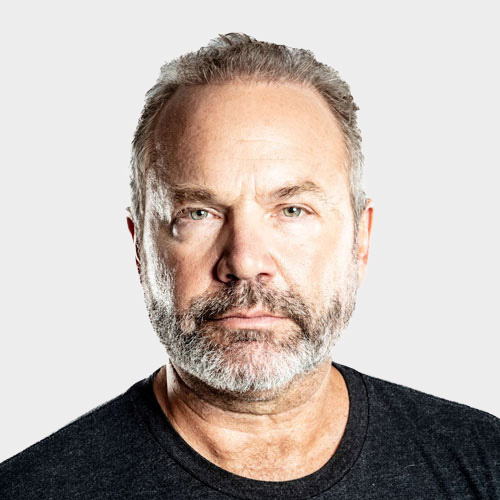
Singer-songwriter John Ondrasik (Five for Fighting) warns that ideological indoctrination and rising anti-Americanism and antisemitism are reaching our youngest students.
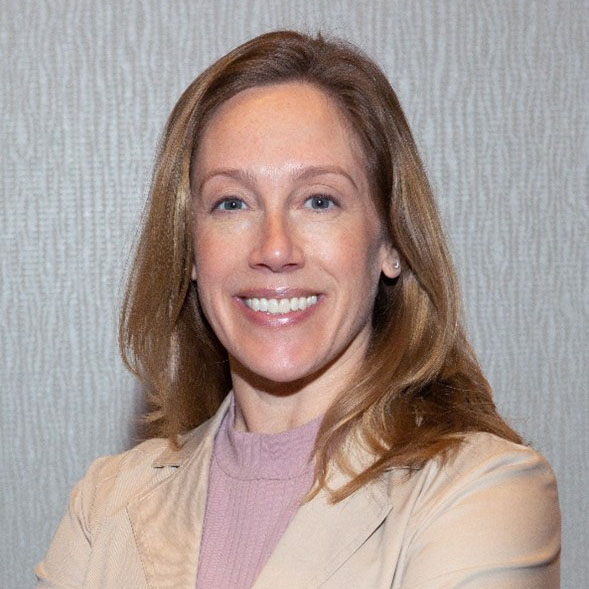
Dr. Sara E. Brown, THINC Advisory Council Member and Regional Director of American Jewish Committee San Diego, describes how the worldview of “liberated” ethnic studies is hostile to Jewish students.
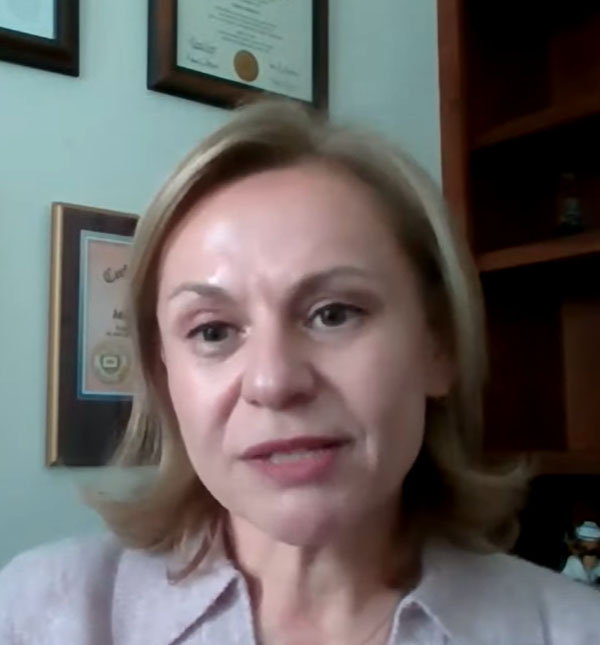
Neurologist Dr. Diana Blum explains how “liberated” ethnic studies sets children up for a lifetime of prejudicial assumptions.
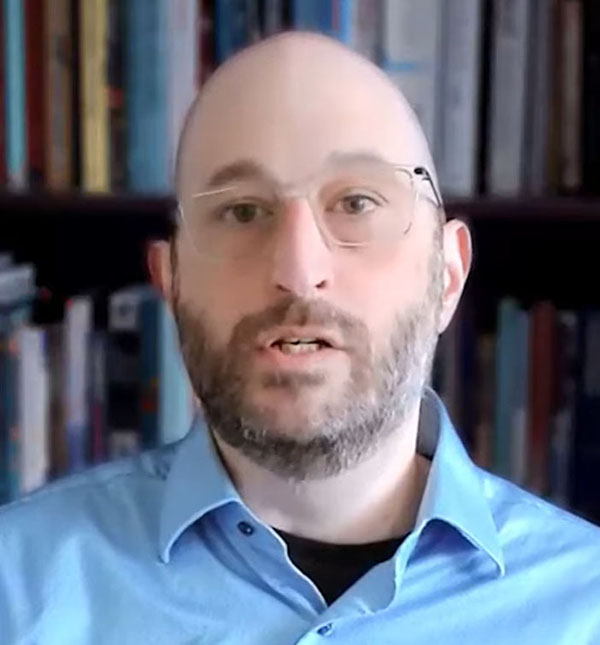
David Smokler, Executive Director of the K-12 Fairness Center at StandWithUs and a former teacher, talks about kindergarten students being subjected to a curriculum designed by an organization that supports abolishing the United States, Israel, and schools themselves.

Stacey Aviva Clark, a faculty lecturer and doctoral student at Gratz College, discusses how the oppressed/oppressor binary teaches children the mindset of a caged bird.

California high school student Karthi Gottipati recounts what happened when he became his school’s student representative to the school board, only to find that the adult board members had little interest in listening to students, parents, or community members.
Support our Work
Our continued work depends on the generosity of people like you! Please consider making a contribution to THINC to fund our continued work to combat Liberated Ethnic Studies and advocate for more constructive education in K-12 schools.
THINC Foundation is a 501(c)(3) non-profit organization that is qualified to receive tax-deductible donations.