
Key Findings from THINC’s 2024 and 2026 Nationwide Surveys of Parents
Across two nationally representative surveys conducted in late 2024 and early 2026, American parents express a clear and consistent set of priorities for K-12 education: civic literacy, transparency, mutual respect, and freedom from political bias.
Parents overwhelmingly want schools to prioritize foundational skills that prepare students to participate thoughtfully and responsibly in a diverse democratic society – not divisive political agendas designed to breed partisan activism.
Strong Support for Civics and Shared American Principles
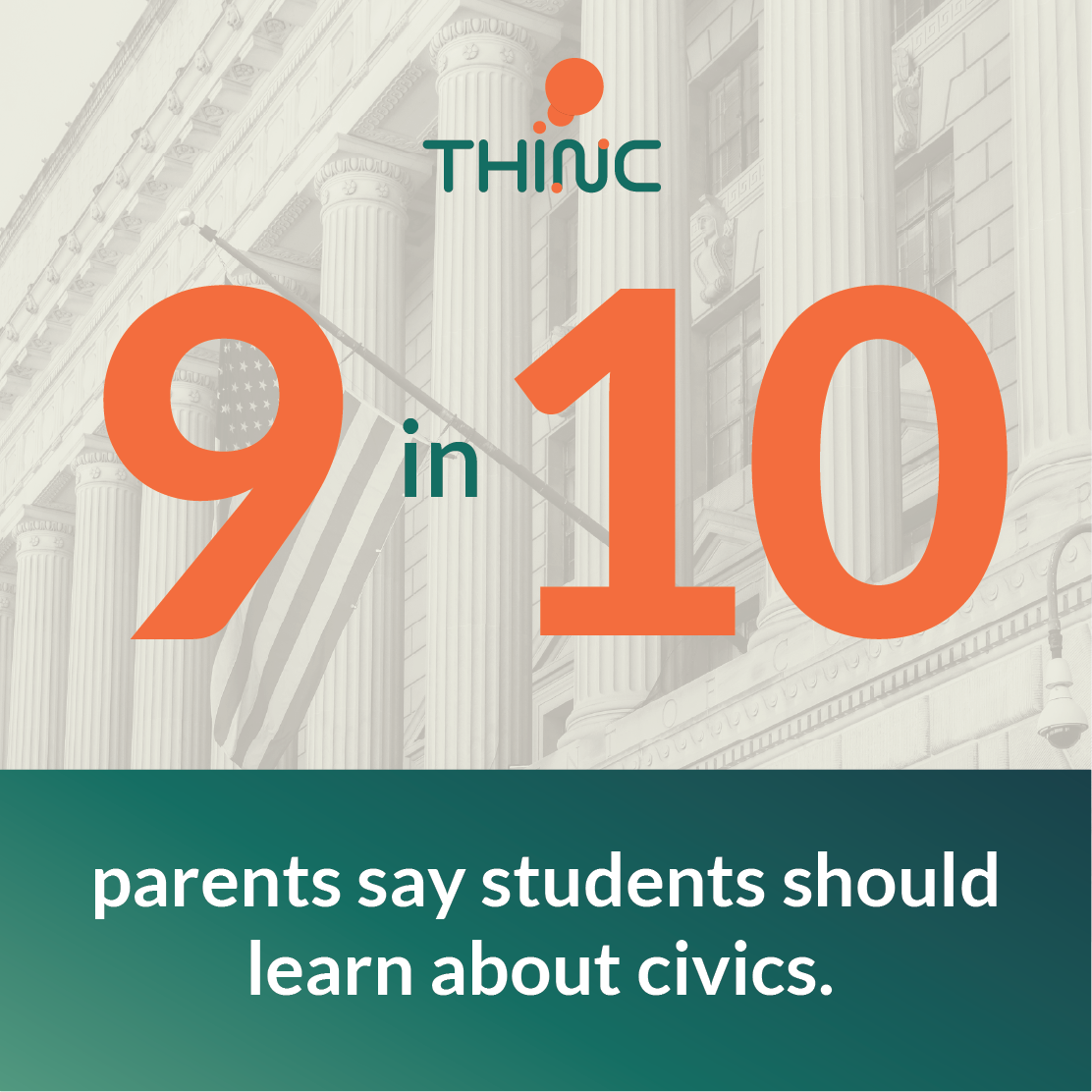
Parents overwhelmingly support teaching civics and core democratic values. In 2026, 90% said it is important to teach civics, while 82% believe students should learn how democratic processes work and how to participate responsibly as citizens.
Broad Consensus on Respect, Cooperation, and Diversity of Thought
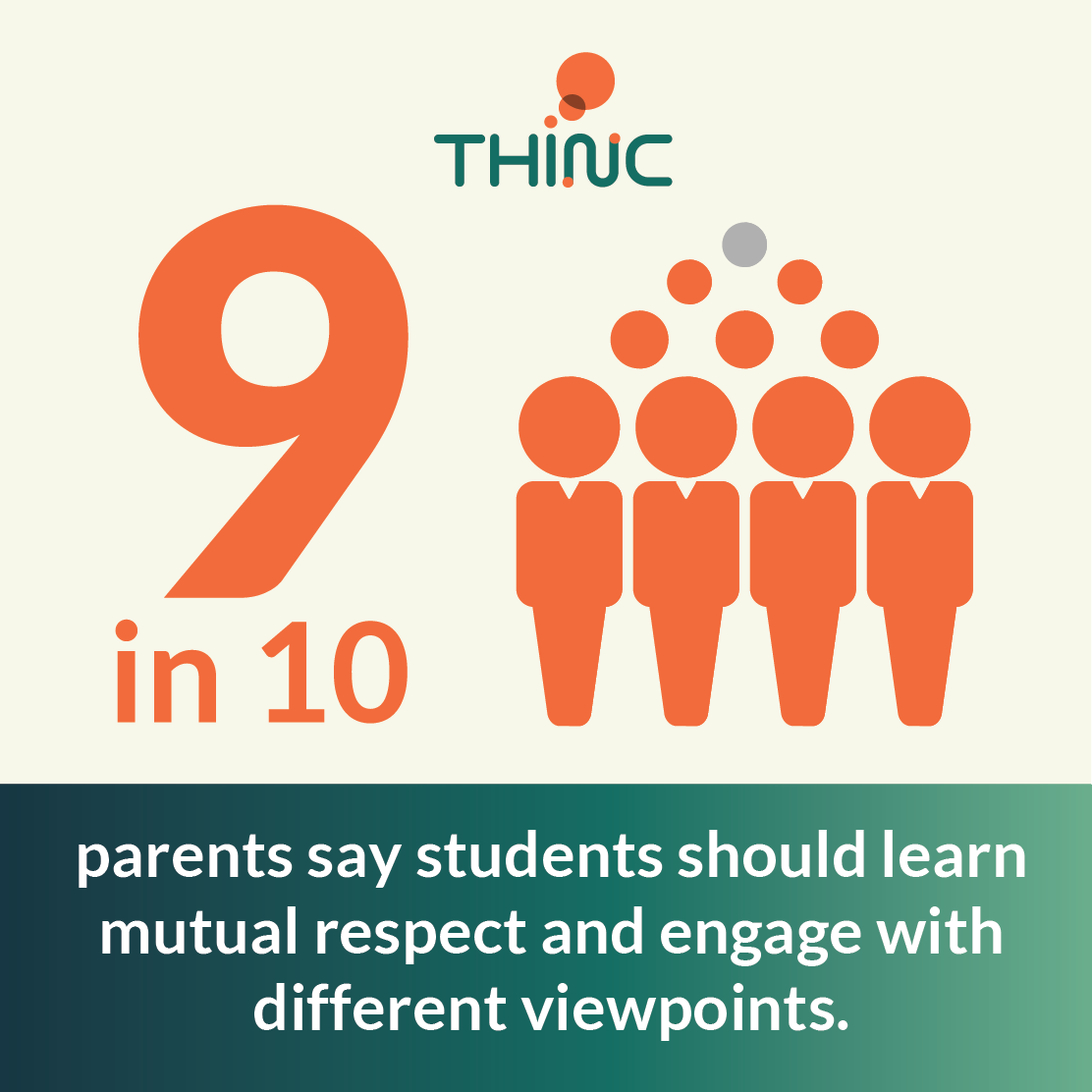
Parents place a high value on teaching students how to engage constructively across differences. In 2026, 91% say it is important for children to learn mutual respect and the ability to engage with viewpoints they disagree with. Similarly, 83% of parents in 2024 emphasized the importance of fostering diversity of thought in the classroom.
Strong Demand for Transparency in Curricula
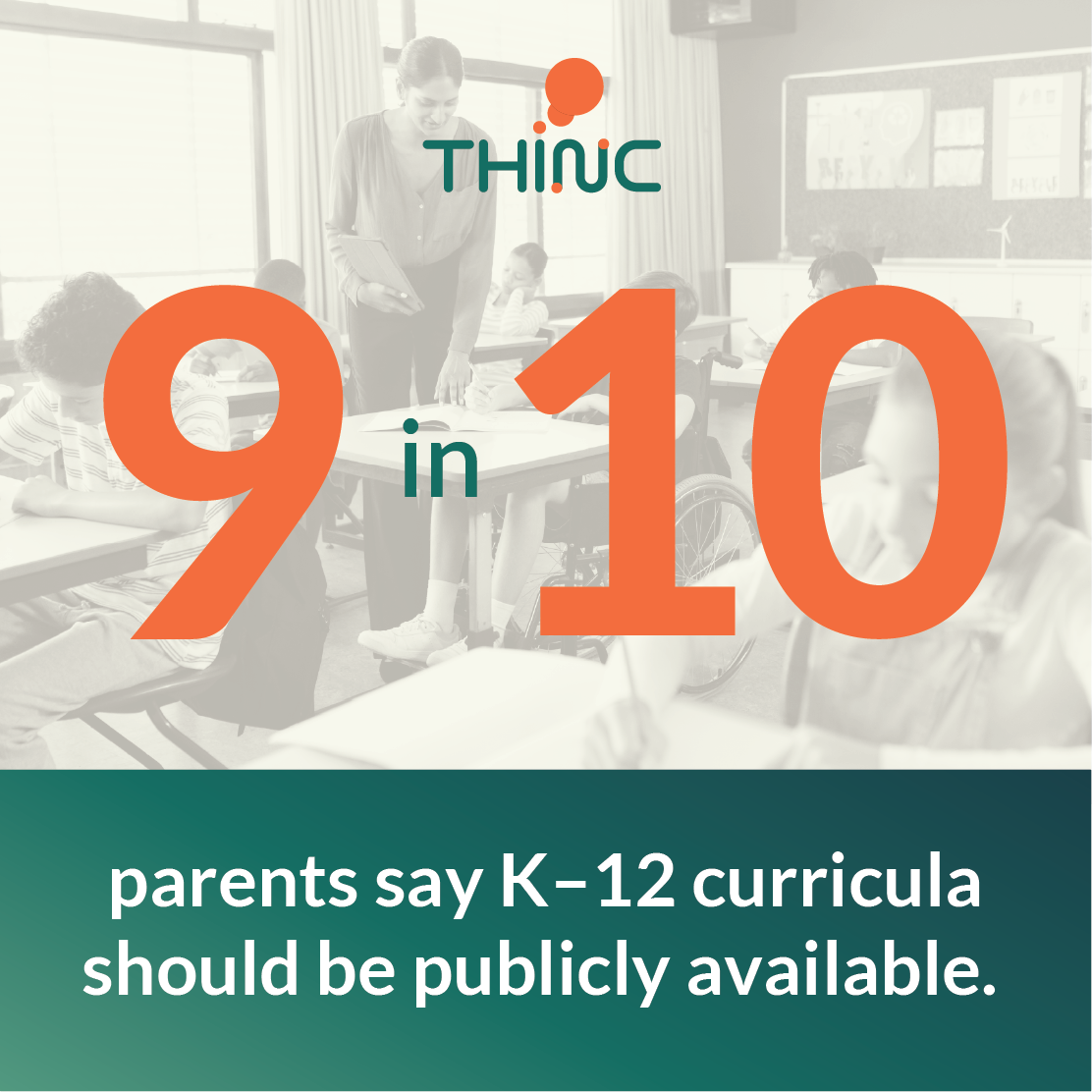
Transparency remains one of the most consistent and widely supported priorities. In 2026, 89% of parents say school curricula should be publicly accessible, closely aligning with 2024 findings where 88% expressed the same view. Parents want clear visibility into what their children are being taught and expect schools to provide it.
Preference for Classrooms Free from Activism
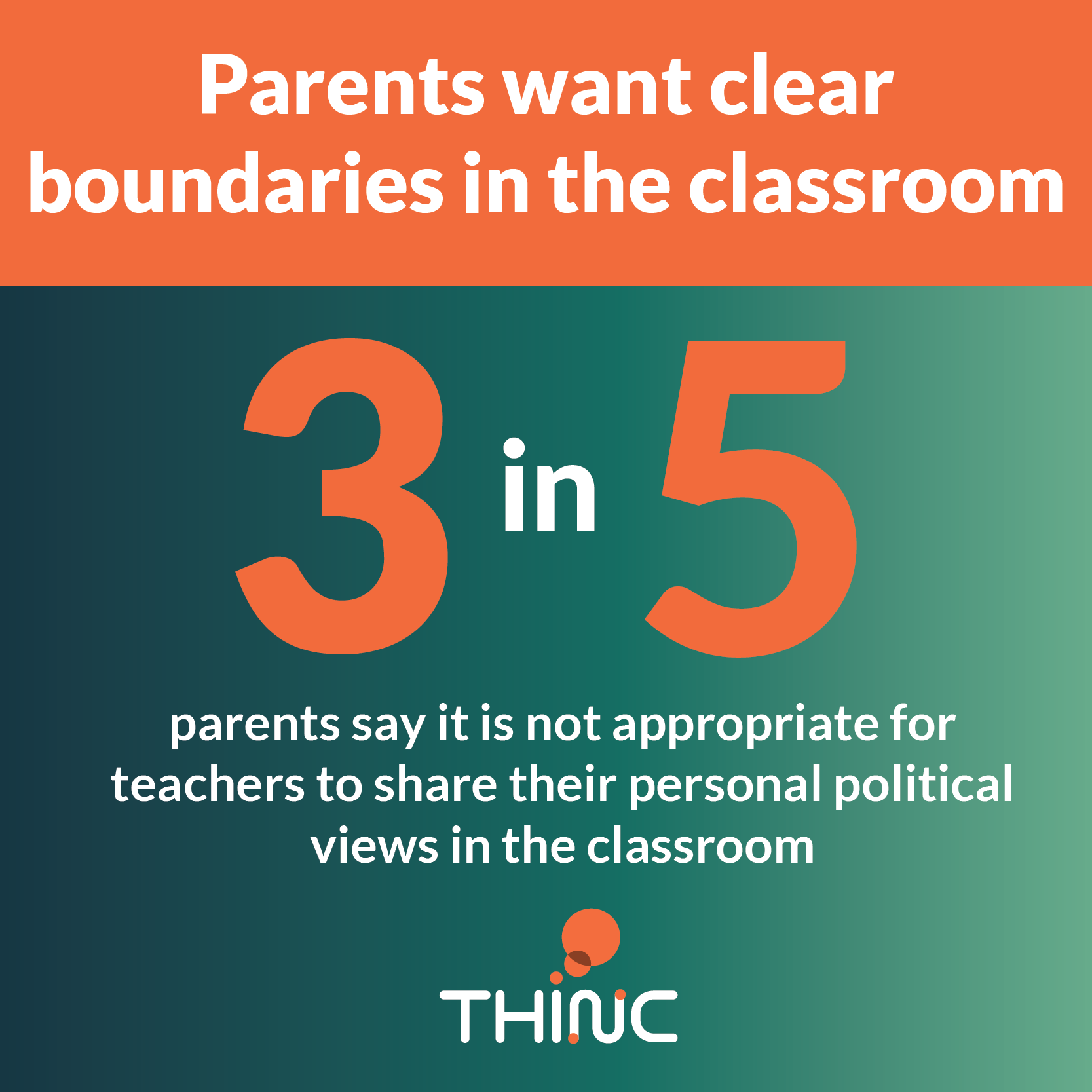
Parents consistently express concern about political bias in the classroom. In 2026, 58% say it is unacceptable for teachers to share their personal political views to their students, while in 2024, 63% said the same. These findings reflect a consistent expectation from three out of five parents that schools should prioritize education, not political advocacy.
Enduring Support for Individual Character, Fairness, and Equal Standards
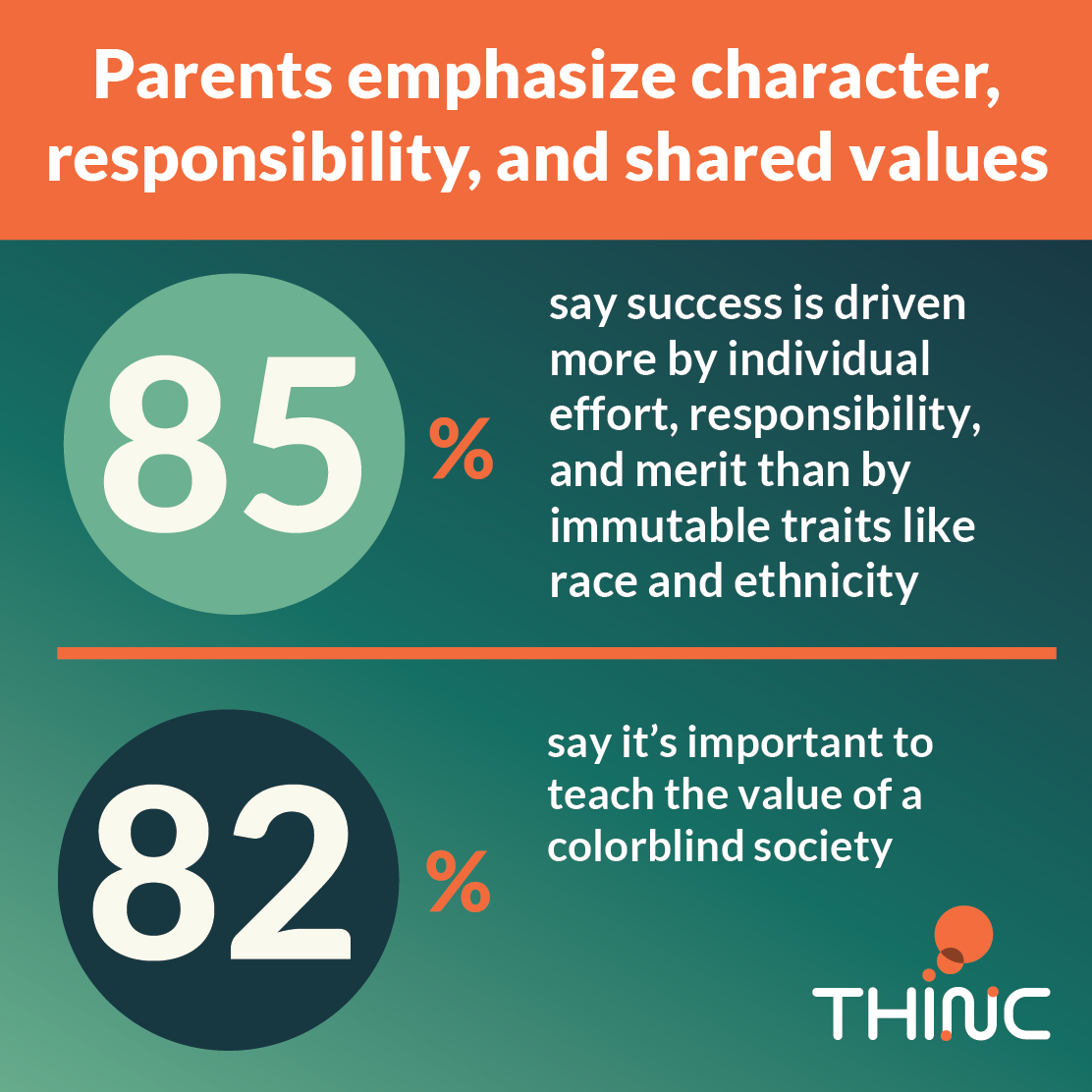
Across both surveys, parents emphasize the importance of character, effort, and equal treatment. In 2026, 85% say individual attributes like effort and perseverance matter more than immutable traits such as race or ethnicity, and 82% support teaching the value of a colorblind society. Notably, 74% of parents also say that racism can come from anyone, regardless of identity or power, reflecting a broad belief that standards of fairness should be applied consistently. This mirrors 2024 findings, where 81% expressed support for teaching a colorblind approach to evaluating individuals and 93% supported Martin Luther King, Jr.’s vision of a society where individuals are judged by the content of their character rather than the color of their skin.
Persistent Concerns About Trust and Curriculum Direction
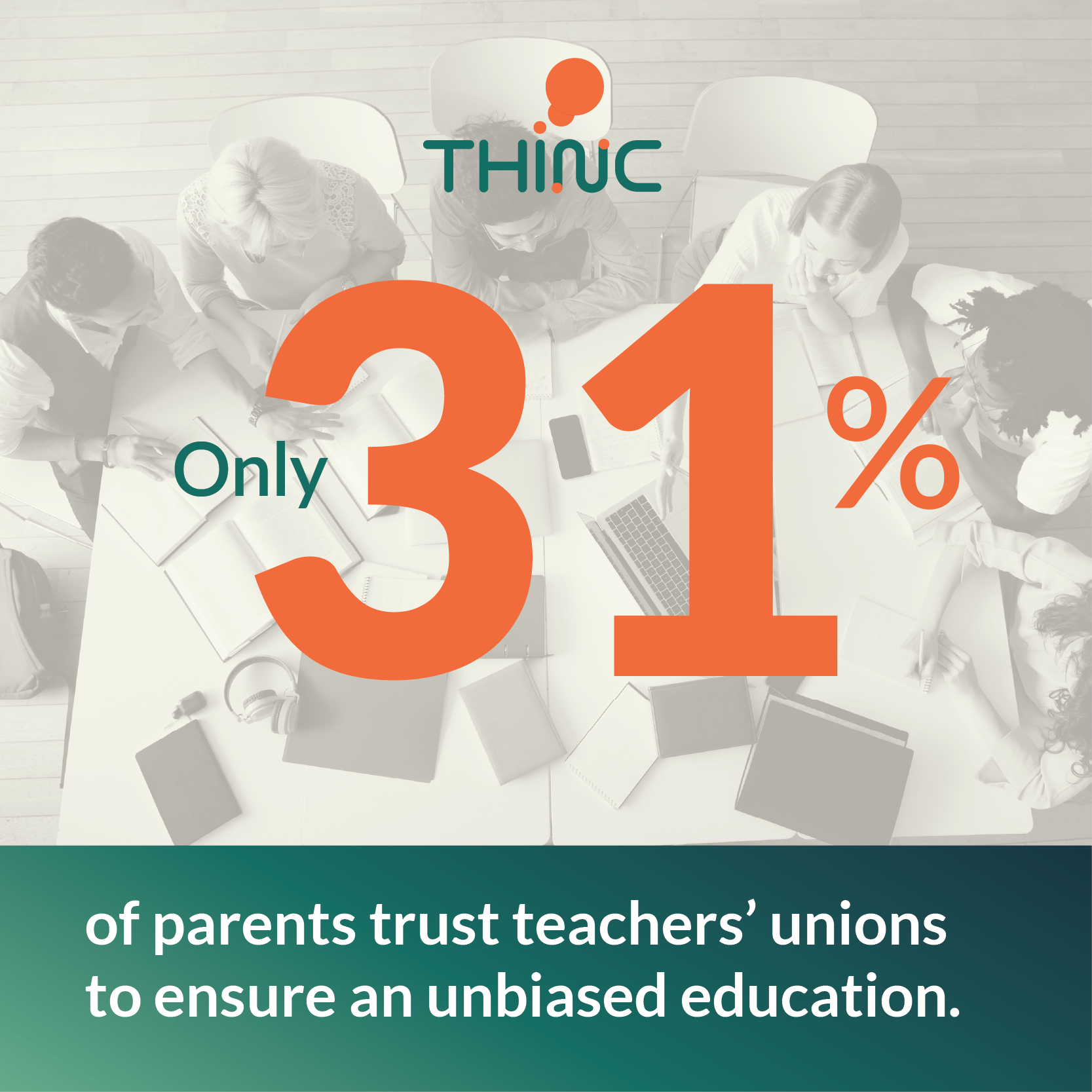
Both surveys reflect parental concerns about curricula. In 2026, 55% of parents say they are concerned about what their children are being taught, and in 2024 only 30% trusted teachers’ unions to provide an unbiased education (the number was nearly identical, 31%, in 2026). These findings point to a gap between parental expectations and confidence in current educational institutions.
Bottom Line
Taken together, the 2024 and 2026 surveys point to a durable consensus among American parents: schools should focus on civic understanding, transparency, respect for differing viewpoints, and the development of individual character while avoiding political advocacy in the classroom.