NOVEMBER 11, 2026 NEWSLETTER
Welcome to THINC Foundation’s newsletter! Published semi-monthly, it contains our views on issues relating to ideology, including liberated ethnic studies, in K-12 schools, as well as relevant news articles and timely calls to action.
Ethnic Studies Should Bring Students Together, Not Divide Them
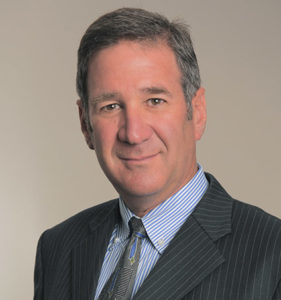
By Mitch Siegler, Founder
Late last month, the U.S. Department of Education opened investigations into three California school districts over their ethnic studies curricula: San Francisco Unified, Palo Alto Unified, and North Monterey County Unified.
The department says the courses included exercises called the “Wheel of Power/Privilege” and “Mapping My Identities.” According to federal officials, these exercises asked students to provide their teachers with sensitive personal information, including their sexual orientation, gender identity, health conditions, family income, and race.
These questions are more than inappropriate; they may well be illegal. If parents weren’t notified and didn’t give written consent, the exercise may violate the Protection of Pupil Rights Amendment. Parents also allege the districts ignored their requests to review course materials.
Think about that for a moment. A school district asks a ninth grader to disclose his family’s income and his sexual orientation, then tells his parents they can’t see the lesson that employed the questionnaire. Whatever the investigation finds, no parent should have to file a federal complaint to learn what their child is being taught.
In San Francisco, the probe hits a course that was already under scrutiny. SFUSD scrapped its homegrown curriculum and replaced it with Voices, a problematic, ideological curriculum that we have written about previously. A parent group at Lowell High School has sued over how the decision about this curriculum was made: namely, without meaningful parental input. Lee Cheng, a civil rights attorney and co-founder of the Friends of Lowell Foundation, said, “Children are being sorted, labeled, and instructed according to race-based ideological frameworks that no parent consented to and that no reasonable reading of federal civil rights law permits.”
Ethnic studies of the “liberated” (read: radical and divisive) variety is taught in classrooms in California and California has long served as a template for other states – what starts in California doesn’t stay in California. Voices itself is not just a California product; it’s also taught in Syracuse, NY, and Pittsburgh, PA.
Let’s be clear about where THINC stands. Ethnic studies has a place in K-12 classrooms. Students benefit from learning about the people of all backgrounds who built this country, and about the hardships entire groups endured along the way. Taught well, it can be one of the most unifying courses a young person takes.
But studying diverse facets of American history is different from making ethnic identity the whole story. Asking 14-year-olds to place themselves on a chart of privilege and disadvantage in a room full of their classmates drives a wedge between students. Some will be embarrassed and others may feel superior or inferior. These sorts of exercises teach students to depersonalize each other and themselves, to reduce human beings to an assemblage of privileges or grievances rather than unique characteristics. Calling it a “reflection” doesn’t change what it is: a sorting exercise.
This isn’t a fringe concern, and it isn’t a partisan one. You don’t have to invite federal investigators into K-12 classrooms to recognize that their presence indicates serious problems.
There’s a better way. Strong ethnic studies courses teach students to examine evidence, weigh competing interpretations, and discuss difficult questions with classmates who may see the world differently. Disagreement is where real learning happens – as long as it happens respectfully. Students should leave the course better able to talk across and despite their differences, not primed to see those differences as part of a moral or societal hierarchy.
That conviction is what drives THINC’s own ethnic studies curriculum, The American Story: Many Streams, One River™. Its foundation is respectful dialogue, and it places a major emphasis on critical thinking. Students engage with primary sources, wrestle with multiple perspectives, and come to see their own family’s story as part of a larger shared one.
Palo Alto’s superintendent was correct in saying, “Parents have a right to know what their children are learning and to make decisions about sensitive personal matters. We take that seriously, along with our responsibility to teach ethnic studies well. Those commitments are not in conflict.”
Whatever comes of these investigations, parents everywhere should be able to see exactly what their children are being taught, in full and without having to fight for it. Good curricula have nothing to hide.
School Leaders Who Get It Right
“We will…continue our schoolwide focus on civil discourse this year. To believe in our students means believing they are capable of listening, thinking critically, expressing their ideas, and treating others with dignity – even when they disagree. In a world where differing opinions are often amplified through social media and online platforms, these skills are increasingly important. At Pioneer [Middle School], civil discourse means learning how to discuss ideas thoughtfully, disagree respectfully, remain curious about other perspectives, and seek understanding.”
– JoAnne Fernandes, Principal of Pioneer Middle School in DuPont, WA
“Educators must create the conditions for respectful dialogue. Students should exercise their right of free speech while balancing that responsibility with respectful and active listening… Schools are one of the few places where students from different backgrounds come together every day. That makes them the perfect environment to learn how to disagree respectfully and still move forward together.”
– Dr. Scott V. Nicol, Superintendent of Ellington Public Schools in Ellington, CT
Support Our Work
Our continued work depends on the generosity of people like you! Please consider making a contribution to THINC to fund our continued work advocating for constructive education in K-12 schools.

THINC Foundation is a 501(c)(3) non-profit organization that is qualified to receive tax-deductible donations.