JANUARY 28, 2026 NEWSLETTER
The THINC Foundation is dedicated to Transparency, Honesty, and Integrity in the Classroom.
Welcome to THINC Foundation’s newsletter! Releasing semi-monthly, it contains our views on key developments in Liberated Ethnic Studies (LES) in K-12 schools as well as relevant news articles and timely calls to action.

When Identity Politics Replaces the Individual in the Classroom
By Mitch Siegler, Founder
For some time now, an insidious shift has been taking place in K-12 classrooms across the U.S. Students are increasingly being taught that their identity as a member of a racial or ethnic group matters more than who they are as individuals. The consequences are devastating.
White and “white-adjacent” students (such as Jewish Americans, Asian Americans, and Hindu Americans) are told that their success isn't really theirs. They've merely profited from "privilege," advantaged by an unfair system designed for their benefit. Their success has not really been earned. They're just fortunate to be members of the "oppressor" class – and they have a duty to the “oppressed” to tip the scales in their favor.
Students of color, on the other hand, are told that they must struggle against a system that is stacked against them by their oppressors, and that it’s somewhat pointless to try; furthermore, any success they achieve comes despite that system.
For all students, the message is clear: individual effort, talent, and character don't matter nearly as much as skin color and ethnicity. Indeed, advocates of identity-based education openly disdain the very concept of merit, dismissing it as “racist" because in their minds all differences in outcomes are due to societal conditions rather than hard work and capabilities. Proficiency tests, grades, and gifted and talented programs should all be done away with, say these ideologues, since merit and performance are the root of the problem.
This narrative robs students of agency. It teaches them that external forces, not their own choices, or effort, determine their outcomes. This ideology – which would never stand up in business, athletics, or most other endeavors – encourages victimhood rather than resilience and resentment rather than ambition and goes a long way in explaining why the performance of our K-12 schools, by most reasonable, quantitative measures, has been in free-fall for years.
As I've written before, American students' test scores continue to decline. In 2024, 32% and 45% of high school seniors scored below the basic level in reading and math, respectively. Critical thinking – which will be crucial in the AI age – has suffered as well. Two-thirds of high school seniors can't reconcile conflicts, judge evidence, or detect bias. They're being taught what to think, not how to think. How will today’s students become the sort of civic and business leaders are country will need in the future? How will they even be informed voters? An inability to solve problems and think flexibly bodes poorly for our future as a country.
Our children and our society deserve better. Students shouldn’t be treated simply as members of broad, monolithic groups. They're individuals with unique talents, challenges, and potential. They deserve teachers who challenge them to excel, not ideologues peddling guilt and resentment.
Ironically, the idea of meritocracy is foundational to the American promise and has driven many successful civil rights efforts across our history. Groups experiencing discrimination have traditionally spoken with a single voice: just give us equal opportunity, and we can compete with the best.
The classroom should be a place where all children are challenged to reach their full potential, where excellence is celebrated, and where students learn to see one another as individuals worthy of dignity and respect. Learning how to debate complex issues, respect opposing viewpoints and disagree in an agreeable fashion are fundamental to these principles.
At THINC Foundation, we believe that every child should be empowered, not diminished. That’s why we fight against the scourge of “liberated” ethnic studies every day and why we’re developing a high school curriculum which brings students together, celebrates their shared humanity, teaches critical/flexible thinking, and teaches them to discuss and debate complex issues. This foundation would serve students and society well in the future.
Missouri Moves to Protect Students from Antisemitism
As a Missouri native, I'm proud to see the Show-Me State taking tangible steps to protect Jewish students and combat ideology in K-12 classrooms.
In January, the Missouri House Committee on Emerging Issues heard testimony on House Bill 2061, legislation that would combat antisemitic discrimination in the state's public schools and universities. The bill defines antisemitism using the International Holocaust Remembrance Alliance (IHRA) Working Definition – which has been adopted by scores of countries and dozens of U.S. state and city governments – and mandates the integration of that definition into student and faculty codes of conduct.
Contrary to what IHRA's critics claim, the Working Definition does not say that criticism of Israel is antisemitic. It also does not limit free speech or dictate what one can or cannot say. These are strawman arguments. The Working Definition is simply a tool to help educators and schools recognize antisemitism when they see it – a necessary step, because antisemitism is notoriously mutable, often disguises itself in new forms, and is often the canary in the coalmine for a society with deeper problems.
HB 2061 also directs the Missouri State Board of Education to designate a Title VI coordinator to monitor, report, and investigate antisemitic discrimination in public schools, creating accountability where it's desperately needed.
This legislation comes on the heels of California’s AB 715, which placed guardrails against antisemitism in the state’s public K-12 schools. That bill was signed into law, appropriately enough, on the second anniversary of Hamas’s October 7 attacks on Israel, which ushered in the tidal wave of overt antisemitism we are faced with now. California became the first state with an Antisemitism Prevention Coordinator, whose job is to train school personnel and proactively prevent antisemitism in K-12 schools.
Missouri's bill is part of a growing movement to address classroom antisemitism at the state level, in both blue and red states – momentum we are happy to see. Jewish students, like all students, deserve to learn in environments free from discrimination, harassment, and hate. Hatred of and discrimination against Jews should be an affront to all decent people. The alarming rise in antisemitism in our times is frightening not only for what it portends for Jews, but for everyone – historically, increasing antisemitism is a leading symptom of a fundamental breakdown in society.
Let’s hope that the Missouri legislature will pass this bill and Governor Mike Kehoe will sign it into law, and that many more states will soon follow.
Liberated Ethnic Studies (LES) Activists in Their Own Words
We talk a lot about the LES movement’s extreme positions, but what does that look like in practice? Take a look at these quotes from prominent LES leaders.
“The culture of Whiteness is centuries-old, yet lives on. Some of the modern features of the culture of Whiteness include racial silence, fragility, and passivity in the face of racial injustice... The Whiteness Pandemic refers to the invisible intergenerational transmission of the culture of Whiteness from adults to children… Like other pandemics, everyone can play a role in stopping the transmission.”
– University of Minnesota Institute of Child Development
“To claim that ‘Black Lives Matter’ is to fundamentally challenge the foundational logic of the U.S. – to assert that a nation-state predicated on historical and present structures of chattel slavery/carcerality, occupation and Indigenous peoples’ genocide, imperialism, and domestic and transnational militarized violence must be abolished.”
– University of California San Diego Ethnic Studies Department
THINC Voices

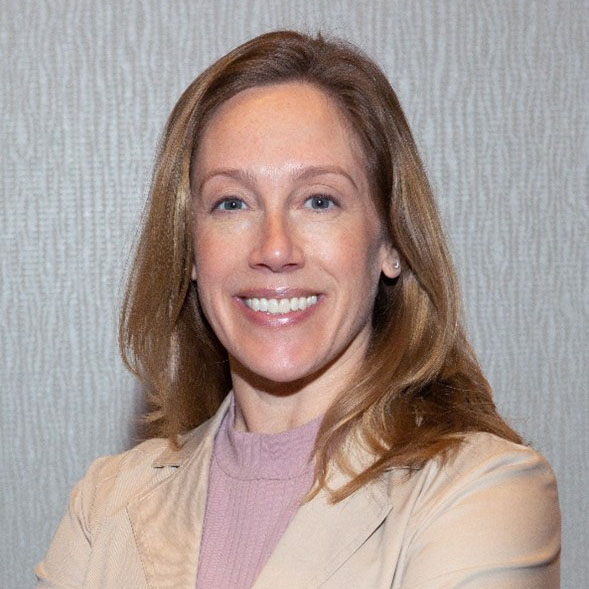
Singer-songwriter and activist John Ondrasik (AKA Five for Fighting) and AJC San Diego Regional Director and THINC Advisory Council Member Sara Brown are frustrated by the ideologies impacting K-12 classrooms. Watch as John and Sara discuss how dangerous, limiting labels and indoctrination are affecting our children.
Support Our Work
Our continued work depends on the generosity of people like you! Please consider making a contribution to THINC to fund our continued work to combat Liberated Ethnic Studies and advocate for more constructive education in K-12 schools.

THINC Foundation is a 501(c)(3) non-profit organization that is qualified to receive tax-deductible donations.