OCTOBER 2025 NEWSLETTER
Their minds are open. Let's keep it that way.
Welcome to THINC Foundation’s newsletter! Releasing semi-monthly, it contains our views on key developments in Liberated Ethnic Studies (LES) in K-12 schools as well as relevant news articles and timely calls to action.

Students Can’t Reason — and Are Being Taught What to Think Instead of How
By Mitch Siegler, Founder
Amid debates over banned books and politicized curricula, American students’ test scores in core areas like reading and mathematics continue to decline.
The latest National Assessment of Educational Progress (NAEP) report card showed that average math and reading scores “dropped to their lowest levels in more than two decades among high school seniors.”
The report card indicated in 2024 that 32% of high school seniors were below NAEP Basic in reading, 33% were at NAEP Basic, and only 35% were at or above NAEP Proficient levels. In 1992, the first year of the assessment, those numbers were 20%, 39%, and 40%, respectively. The average score in 2024 was 10 points lower than it was in 1992.
Twelfth-grade performance in mathematics has also worsened: 45% scored below NAEP Basic, compared to 39% in 2005, 38% in 2015, and 40% in 2019. Yikes!
“Scores for our lowest-performing students are at historic lows – continued declines that began more than a decade ago,” said Matthew Soldner, acting director of the Institute of Education Sciences (IES).
Robert Pondiscio of the American Enterprise Institute explains that, when students are at or below NAEP’s Basic level, “They can’t reconcile conflicts, judge evidence, or detect bias. They may read the words, but they can’t test the arguments…Their skepticism leads to cynicism or blind faith. They must either trust or reject the messenger wholesale…[T]heir capacity to evaluate evidence is outsourced entirely to others.”
This sad state of affairs describes a whopping two-thirds of American high school seniors.
It is profoundly disturbing that students’ inability to deal with nuance and complexity is occurring at the exact same time they are being fed dogmatic rubbish in the form of “liberated” ethnic studies, a “discipline” that disdains the very idea of nuance. It spoon-feeds the “answers,” telling students what to think and how to feel, but skips the hard work of teaching flexible or critical thinking, reasoned debate, compromise, or disagreeing in an agreeable manner.
This ideological approach wages war against the very concept of meritocracy, scorning it as “racist.” It’s no wonder that performance against measurable standards – like those NAEP has had in place for decades – is plummeting virtually in lock-step with the growth in ideology at the expense of nuanced thinking and reasoned debate.
The opportunity cost of liberated curricula for students and society is staggering.
David Steiner, Executive Director of the Johns Hopkins Institute for Education Policy and a professor of education at Johns Hopkins University, writes that students are learning skills without knowledge, which is sort of like attempting to build a house without first leveling and grading the site. “[K]nowledge acquisition,” he writes, “is the essential foundation for complex thought, including thinking critically about a topic.”
The systematic devaluing of knowledge in favor of trendy and empty radicalism means that students simply cannot put two and two together because they don’t know what they don’t know.
The priority of education should be education, not activism.
We must emphasize common sense civics, reading, writing, and arithmetic. We need to return to teaching American history, warts and all. We must teach children to strive for excellence. We must teach critical thinking, but as Professor Steiner aptly points out, we must provide the foundational basis – knowledge – first.
Otherwise, the proficiency scores will continue to decline – and we will have failed our children and America.
In California, AB 715 Is the Law of the Land
Great news – on Tuesday, California Governor Gavin Newsom signed Assembly Bill 715 into law. California will be the first state with an Antisemitism Prevention Coordinator, whose job will be to train school personnel on antisemitism and to identify and proactively prevent antisemitism in K-12 schools.
As I have written previously, the bill is not perfect, but it is a great step forward in protecting students of every background from antisemitic ideology, which belongs nowhere near a K-12 classroom.
Governor Newsom signed the bill in spite of opposition from the California Teachers Association and groups such as the Council on American-Islamic Relations (CAIR) and the Arab Resource and Organizing Center (AROC), none of whom were shy in decrying the bill as a form of censorship that will “chill instruction” about the Israeli-Palestinian conflict.
Their statements are disingenuous at best and dishonest at worst. The bill simply and commonsensically recognizes the need to create a safe environment for Jewish students amid the explosion of antisemitism – some of it coming from classroom teachers themselves – since Hamas’s October 7, 2023 attacks on Israel. If teachers perceive this as a threat, that says more about them than it does about Israel.
The need for AB 715 is a sign of the times. While Jewish students aren’t the only ones being harmed by dangerous ideology in our schools, their legitimate concerns have been singled out for ridicule and minimization by some of the most powerful forces in education, including teachers’ unions. AB 715 is a powerful signal that those concerns, as well as broader concerns about accuracy and ideology in K-12 education, are finally beginning to be taken seriously.
Thank you to all those who contacted their legislators and wrote to Governor Newsom. Thank you to California Assembly Members Dawn Addis and Rick Zbur, who co-authored AB 715, and to the legislators who unanimously voted to pass the bill.
Thank you to those who’ve followed our newsletter and our social media updates, and read our op-ed (co-authored with the Alliance for Constructive Ethnic Studies), as this vital legislation was introduced and passed. Finally, thank you to Governor Newsom for signing it into law. Here’s hoping that other states take note and follow California’s example, and AB 715 marks the beginning of the changing tide in attitudes of Californians – and other Americans – about stamping out hate and keeping dangerous ideology out of our K-12 schools.
Advisory Council Spotlight: Sarah Hernholm
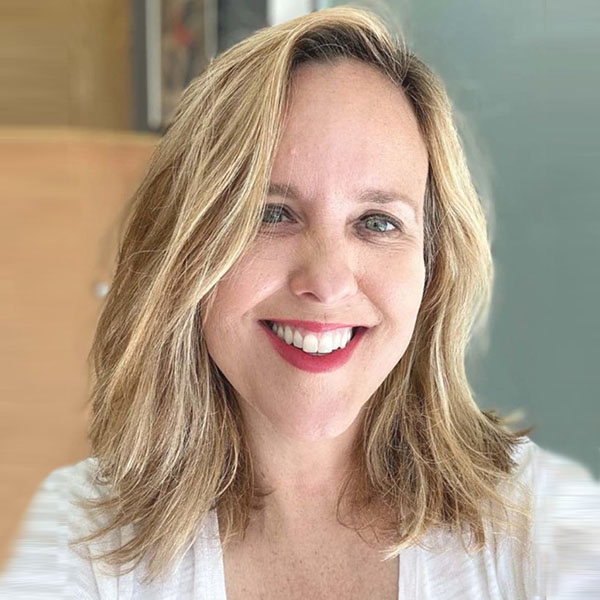
A former teacher turned entrepreneur, Sarah Hernholm is the Founder/President of WIT – Whatever It Takes (WIT) and the host of the DO WIT podcast. Sarah’s focus is on creating platforms for teens to use their voices, launch businesses, and create sustainable impacts in their communities.
Sarah champions young entrepreneurs who are committed to innovation and to doing “whatever it takes to make the world a better place.” In addition, she’s a speaker with the Washington Speakers Bureau, a three-time TEDx speaker, contributor to FORBES, blogger on The Today Show, and is working on her book, The 11 Tips for Doing WIT.
Sarah received a B.A. in Theatre Arts from Pepperdine University, teaching credentials from Point Loma Nazarene University, and an M.A. in Education from National University.
She is actively involved as a volunteer in her community, leading park clean-ups and advocating with elected officials on responsible homeless policy.
Ideologues in schools remove agency from and disempower students. Sarah strives to give students the power to control their own destinies and do “whatever it takes”. We always appreciate Sarah’s advocacy, strategic mindset, and the thoughtfulness she brings to the table.
THINC Voices

Stacey Aviva Clark, a faculty lecturer and doctoral student at Gratz College, explains what ethnic studies should be.
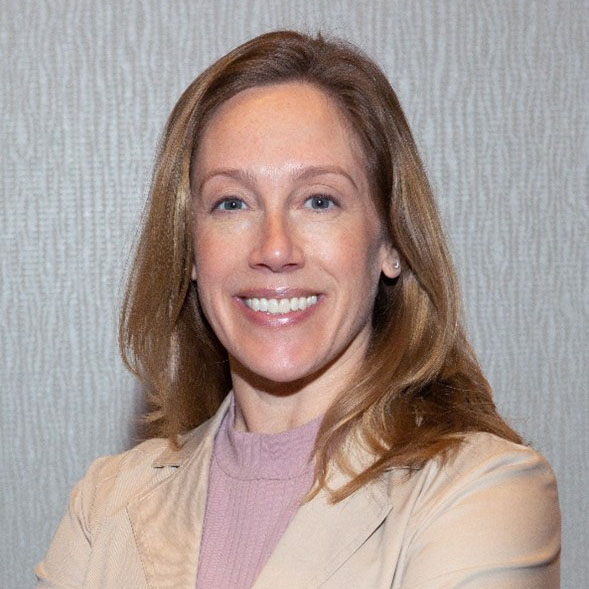
Dr. Sara E. Brown, THINC Advisory Council member and Regional Director of American Jewish Committee San Diego, exposes inaccurate, hateful anti-Israel material sent to students in pre-K through second grade in the San Diego Unified School District.
Liberated Ethnic Studies (LES) Activists in Their Own Words
We talk a lot about the LES movement’s extreme positions, but what does that look like in practice? Take a look at these quotes from prominent LES leaders.
“Educators must teach students how to identify racially, socially, and morally unjust political actions, so these students can take the lessons they learn within our classrooms, mobilize, dismantle oppressive systems, and lead themselves and future generations to a more socially conscious and equitable society.”
- Holly Spinelli is an active member of the National Council of Teachers of English’s Committee Against Racism and Bias in the Teaching of English
“At a time when 80% of the state’s K-12 population is composed of students of color, many of whose communities are under ICE attack, [California Assemblymember Dawn] Addis and other lawmakers have sacrificed the interests of teachers and students in order to protect a foreign state that is committing genocide.”
– Abeer Shinnawi is an 18-year veteran middle school social studies teacher who is the founder and consultant for Altair Education Consulting, LLC.
[In a nationwide survey of nearly 1,500 parents commissioned by THINC, nine in ten parents want to see their schools’ curricula made public. Fewer than one in three parents think it is acceptable for teachers to share their personal politics with their students, and four out of five support their child being taught the importance of a colorblind society.]
THINC in the News
“Ideology shouldn’t displace education in our K-12 classrooms”
by THINC CEO & Founder Mitch Siegler and Elina Kaplan, President and Co-Founder of Alliance for Constructive Ethnic Studies (ACES), The San Diego Union-Tribune
Support our Work
Our continued work depends on the generosity of people like you! Please consider making a contribution to THINC to fund our continued work to combat Liberated Ethnic Studies and advocate for more constructive education in K-12 schools.
THINC Foundation is a 501(c)(3) non-profit organization that is qualified to receive tax-deductible donations.